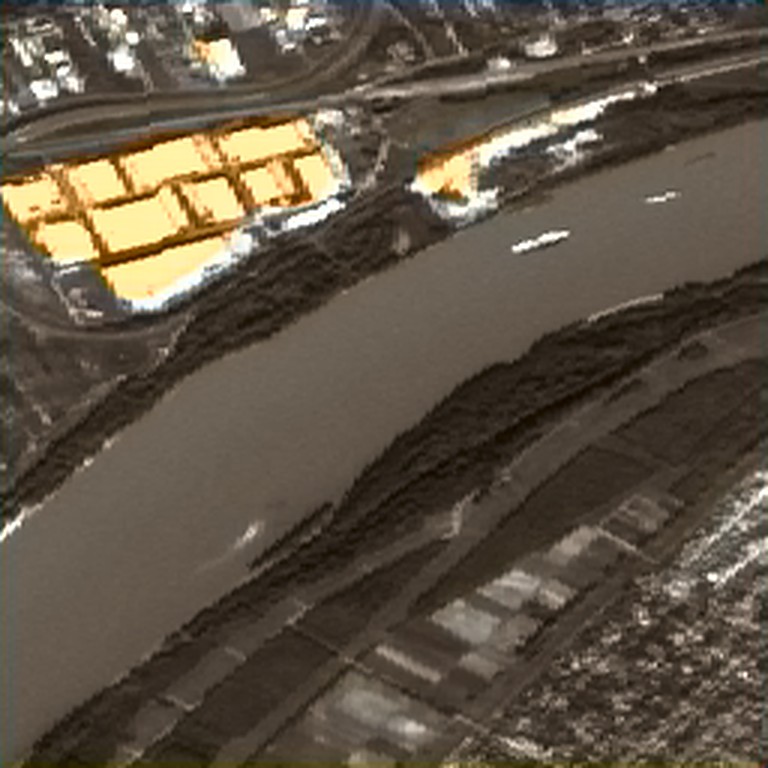
Giving radar some colour
Sharath Koppu · Published 20 October 2026
Synthetic aperture radar is a critical tool from geological studies to environmental monitoring, rich in structure and texture — and almost always shown in grayscale, which makes it hard to read at a glance.
This project trains a deep-learning model to predict colour for SAR images by learning from paired SAR and optical data, so surface features become easier to tell apart.
How it learns
The model is trained to minimise a custom loss between the predicted and the true colour image, aiming for a balance of accuracy, processing time and visual appeal — the places where earlier models had fallen short on this task.
The hard parts
- Preprocessing: SAR is inherently noisy, and it has to be prepared before a network can learn from it.
- Model design: the architecture has to handle the characteristics of radar rather than photographs.
- Evaluation: quality is measured with metrics such as peak signal-to-noise ratio, not judged by eye.
The code is on GitHub.
Sharath Koppu
AI & Software Engineer
Scoring an intervention by replaying it
Ideas worth returning to.
Occasional writing. No noise.